Perforated window graphics for Dubai storefronts
One-way vision window graphics use a printed perforated film to turn glass into an outward-facing brand or campaign surface while leaving small openings through the graphic. They can suit shopfronts and other commercial glazing where the exterior message matters but an inside-out view is also desirable. Al Burooj Advertising can review your pane photographs, dimensions and approved design to plan the film, coverage and installation scope.
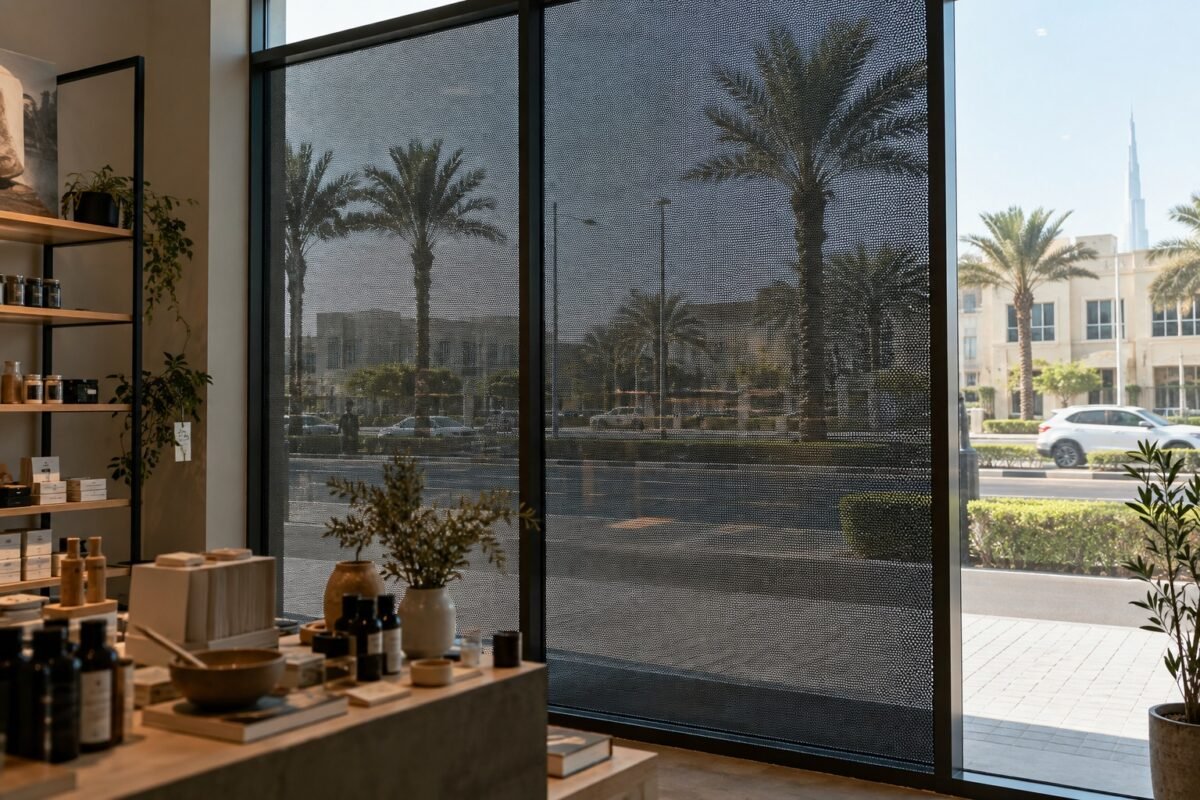
The phrase “one-way vision” needs care. The effect is strongly affected by relative light levels: a bright exterior and darker interior can favour the printed face, but a brightly lit interior at night may become visible from outside. Do not treat this film as guaranteed privacy at all hours. If dependable screening is the main requirement, compare frosted window film or another more opaque treatment.
How the film looks from each side
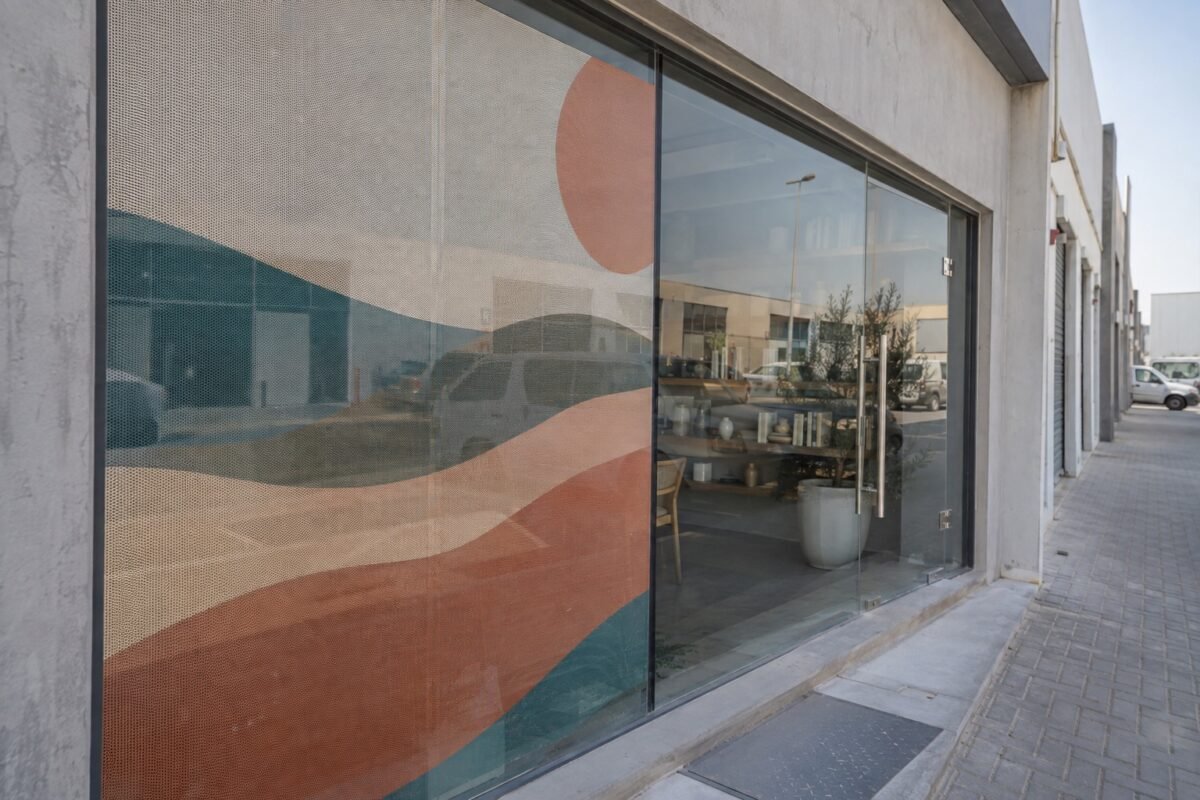
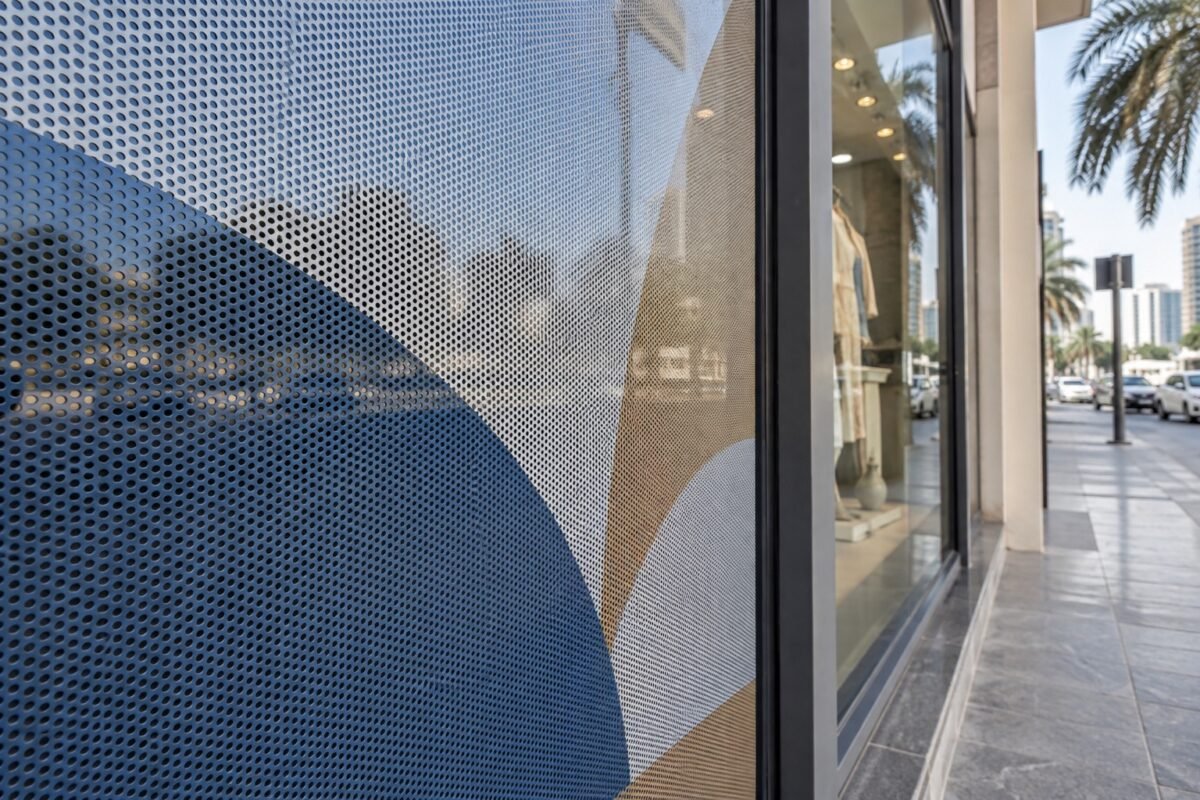
The printed front carries the graphic; the dark reverse side and open perforations allow a degree of view through from behind. Perforation patterns differ by product, so the balance between colour coverage, daylight and outward view changes with the chosen specification. A small sample viewed at the actual site can be more useful than judging a film only from a screen.
Keep important lettering large enough to read across the perforations and avoid narrow strokes that break apart visually. Design around frames, door handles and separate panes rather than stretching critical content over a mullion. For help preparing a window layout, see our creative design service. For a different look with less overall coverage, explore window lettering or the wider window graphics options.
Glass suitability, fitting and maintenance
Before printing, identify the glazing type, any tint or coating, existing film, application side and access to the pane. The exact film and any compatible protective laminate should be selected for those conditions. A laminate may help protect the graphic and keep dirt and water out of the openings, but it must be specified as part of a compatible system rather than assumed for every job.
Installation planning includes accurate pane measurements, a clean glass surface, frame clearances and safe access to the whole area. Confirm whether old graphics must be removed first. The quotation should state whether artwork, printing, delivery, fitting, access equipment and removal are included. For a coordinated frontage, discuss the window graphic alongside storefront signage and sign installation.
What about vehicle windows?
Some perforated film systems are used on vehicle glazing, but this is not an automatic approval for every window. Driver sightlines, local requirements and the precise film system must be reviewed before any vehicle application. Send clear vehicle photos showing the intended panels and do not cover glass where legal or safety requirements prohibit it.
Request a project-specific quote
Send a whole-frontage photograph, close-up photos, width and height for each pane, your approved artwork or message, preferred coverage, location and required date. Mention glass tint, existing graphics and whether you need an outward view after installation. Al Burooj Advertising L.L.C is based in Al Quoz, Dubai; for work elsewhere in the UAE, share the emirate so delivery or installation availability can be confirmed.
Request a one-way vision graphics quote or call +971 52 673 4053. The images on this page are illustrative concepts, not completed Al Burooj projects; final film, artwork and fitting details are agreed for your brief.
One-way vision window graphics FAQs
What are one-way vision window graphics?
They are printed perforated films with small openings across the graphic. The printed face presents an image to people outside, while the openings can preserve some view through the glass from inside. The result depends on the selected film, artwork and lighting.
Do perforated graphics provide privacy at night?
Not reliably. When a room is brightly lit and the outside is dark, people outside may be able to see in through the perforations. If dependable privacy after dark is essential, discuss a different coverage or an additional blind or screening solution.
Can people inside still see out?
Usually some outward visibility remains, but the view is reduced by the printed area, open-area pattern, lighting and viewing distance. Ask to review a material sample at the intended window if the outward view is important.
Does the perforation percentage matter?
Yes. Different products have different proportions of printed surface and open area, affecting print appearance, outward view and daylight. There is no single ratio that suits every pane; confirm the exact film specification in the quotation.
Can the film go on the inside of the glass?
The application side depends on the specific film and print construction. Some products are designed for exterior mounting; others may use a different method. Confirm the glazing type, coatings, tint, access and desired viewing side before production.
Should perforated film be laminated?
A compatible clear overlaminate may protect the print and help keep dirt and water from accumulating in the openings, depending on the selected film system. Ask which laminate, if any, is specified and whether it changes the appearance or cleaning instructions.
Can one-way vision film be used on vehicle windows?
Vehicle-window use needs a separate check of the film specification, the exact window position, driver visibility and applicable rules. Do not cover any glass where visibility or law would prohibit it. Send vehicle photos and the intended panel locations for review.
How long will the graphic last and can it be removed?
Service life and removal effort vary with product, print, laminate, sun exposure, cleaning, adhesive and glass condition. Tell the team whether the graphic is a short campaign or a longer installation, and confirm replacement or removal scope in the quote.
What do you need to quote my windows?
Send straight-on and close-up photos, each pane width and height, approved artwork or message, desired coverage, installation address, required date and notes about existing tint or film. Ask for an itemised scope covering artwork, print, installation, access and removal where needed.