Custom LED neon signs in Dubai
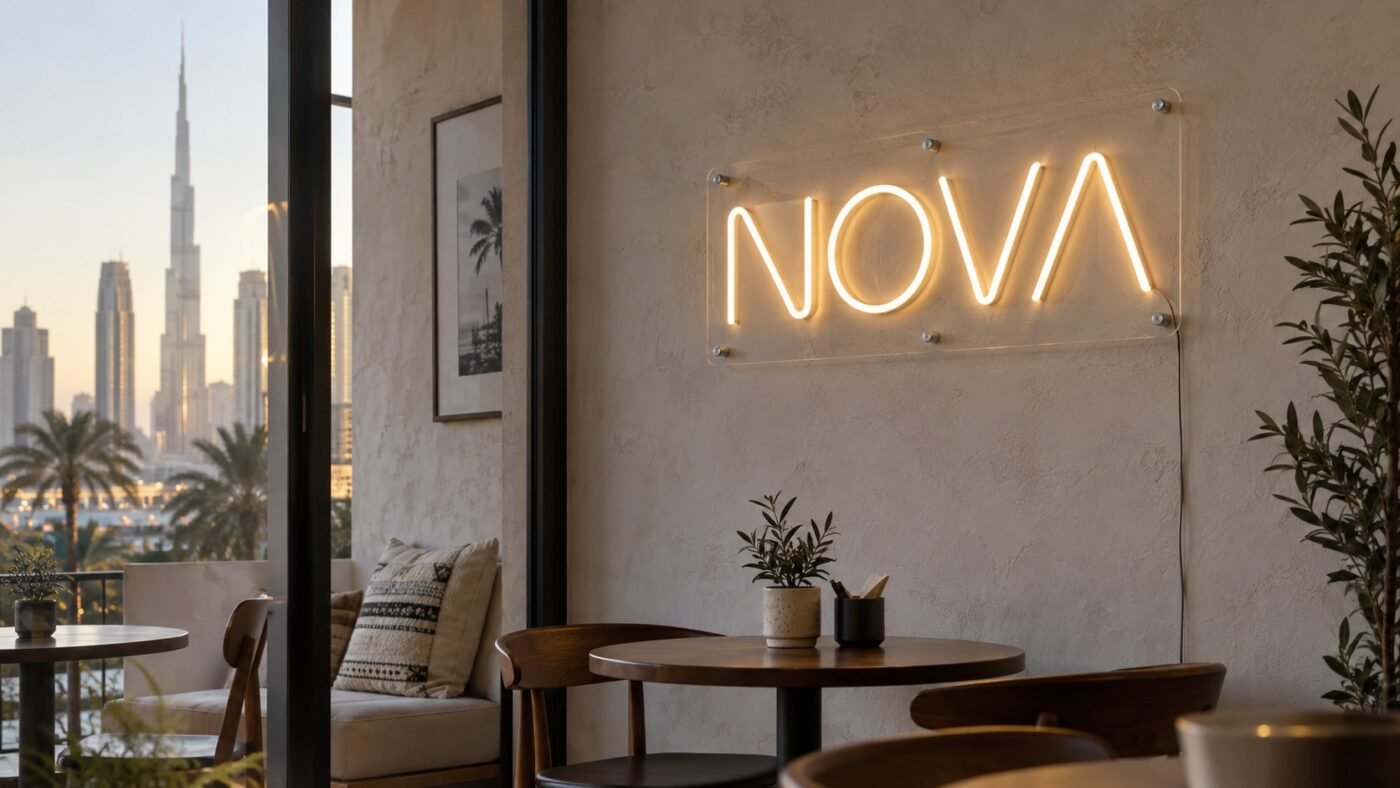
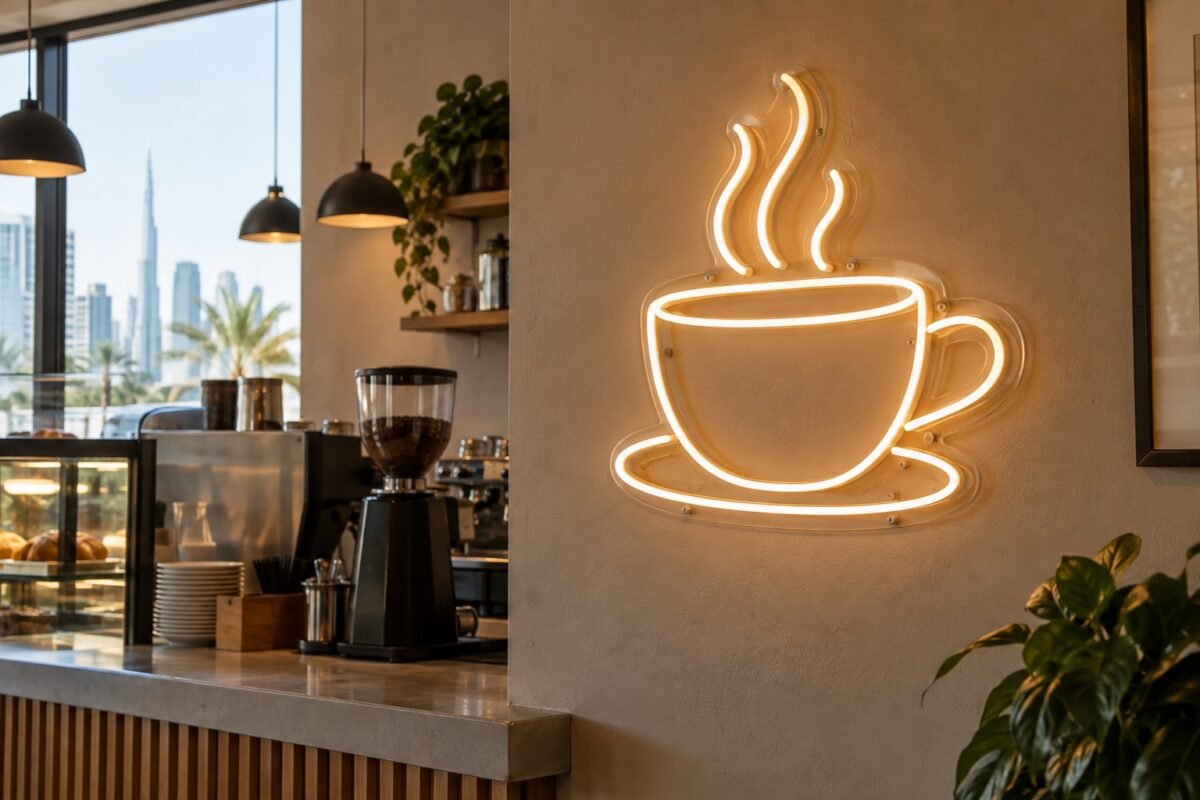
LED neon-style signs use a continuous diffused light line to form words, logos and simple shapes. They can make a brand name visible in a shop window, add a focal point behind a reception desk or create a graphic feature in a cafe, salon or event space. Al Burooj Advertising works from your wording, artwork and site details to plan the size, colour, backing and installation scope.
The term “neon” can refer to different products. Traditional neon is formed glass gas-discharge tubing. LED neon-style signage uses LED lighting inside a flexible diffuser to create a similar line of light. If your brief requires actual glass neon, state that explicitly; the construction, power and installation requirements need separate review. For solid illuminated letters, compare channel letter signs or 3D illuminated lettering.
Choose the wording, colour and viewing position
Keep the message readable at the distance where customers will see it. A short name, word or simple symbol usually has more impact than a crowded composition. Thin strokes, closely joined letters, small counters and sharp turns can affect how the light line is routed. Send vector artwork where possible; a designer can check whether the proposed dimensions preserve the important details. Our signage design service can help prepare artwork for approval.
Light colour should be chosen with the wall, glazing and surrounding illumination in mind. A warm white sign on a pale wall looks different from the same sign in a bright shop window. Confirm whether a compatible timer or dimmer is part of the brief, and review the colour and brightness specification before production.
Backing and mounting options
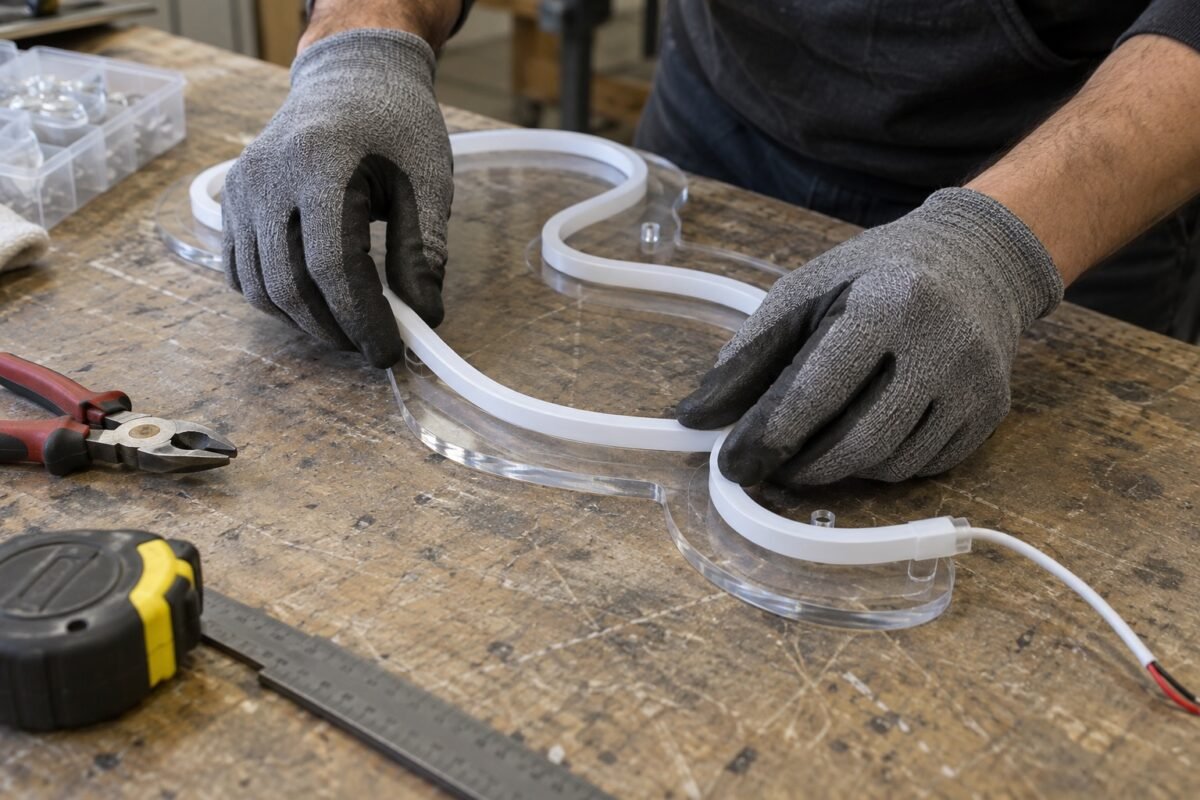
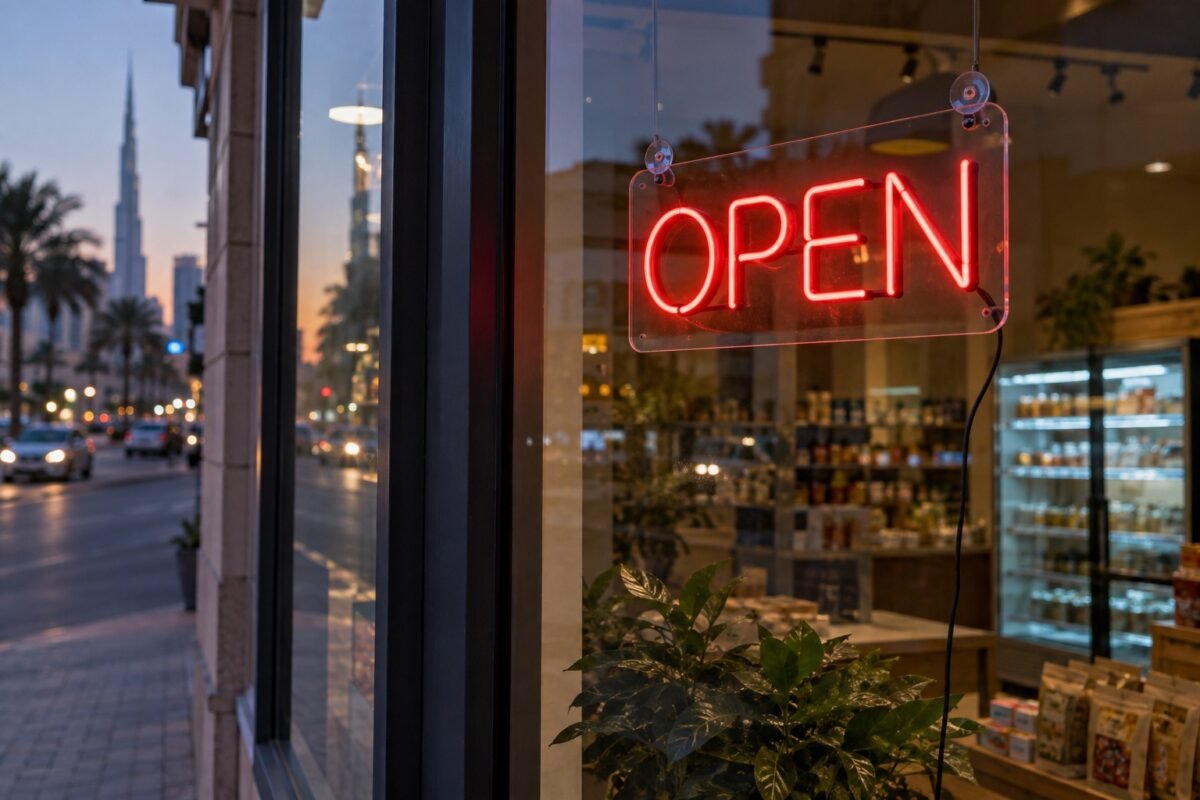
LED neon-style tubing is commonly fixed to a supporting panel or structure. A clear acrylic backing can leave the wall visible, while a shape-cut or full backing panel changes the visual outline. The finished drawing should show the backing edge, fixing points, cable exit and power-supply location. For a window sign, plan the hanging or mounting method so the sign can be viewed clearly from outside without an awkward visible cable.
Site photos help establish the wall or window dimensions, material and available power. For an interior brand wall, compare a neon-style line with reception signage. For an external shopfront, the sign area, fixing method and property requirements should be checked alongside the wider storefront signage scheme.
Indoor and outdoor specifications
Tell the team whether the sign will be indoors, behind glass or exposed outdoors. The chosen light source, backing, power components and mounting need to suit that location. Outdoor signs may require additional consideration of weather exposure, access and property approvals. Confirm who handles installation, the electrical connection and any submission to the landlord or property team. Related support includes signage plans and permits and sign installation.
What affects the quote?
The overall width, quantity of light-line detail, colour, backing, power components, artwork preparation and installation access all affect price. Ask for an itemised scope that identifies fabrication, delivery, mounting, electrical work, approval tasks and any future service needs. If the brief calls for a large uniformly lit panel rather than a line-drawn sign, compare lightbox signs and LED displays.
To request a useful quote, send the exact text or logo, approximate width, colour reference, site photos, location, required date and a note about the nearest power point. If some dimensions are unknown, share what you have so they can be confirmed before final artwork and production.
LED neon sign FAQs
What is the difference between LED neon and traditional glass neon?
Traditional neon uses formed glass gas-discharge tubing. LED neon-style signs use an LED light source within a flexible diffuser to create a similar continuous line appearance. State which technology you want when requesting a quote.
Can an LED neon sign follow my logo or handwriting?
Many words, simple logos and outlines can be adapted, but tight curves, very small lettering and thin details need a production review. Send vector artwork or a clear reference with the intended finished size so the light path can be checked.
Does the sign need an acrylic backing?
A clear or coloured backing can hold the light line and provide fixing points. A full panel, a shape-cut backing and other mounting approaches have different visual results. Agree the backing outline, visible fixings and cable route on the drawing.
Can LED neon-style signs be used outdoors?
Outdoor use depends on the selected components, enclosure, mounting and exposure at the proposed site. Share site photos and confirm the outdoor specification, power connection and any property approval before production.
What colours and lighting controls can I choose?
Discuss the desired colour, brightness and whether a compatible dimmer or timer is needed. Colour appearance changes with surrounding light and background colour. Confirm the actual components and controls in the quotation.
Where does the power cable go?
The cable route depends on the sign position, backing, wall or window construction and available power point. Send a photo showing the whole installation area and nearby power. Agree how the cable and power supply will be concealed or displayed.
How much does a custom LED neon sign cost in Dubai?
Cost depends on overall dimensions, wording or logo complexity, colour, backing, power components, quantity and installation access. Ask for an itemised quotation that states whether artwork, delivery, electrical connection, approvals and mounting are included.
Can LED neon signs include Arabic and English?
Both scripts can be considered, subject to artwork and production review. Provide approved wording and vector files. Small dots, tight curves and letter connections may need adjustments at the chosen sign size.
What should I send for a quote and timeline?
Send the exact wording or logo, approximate width, colour reference, indoor or outdoor location, site photos, power position and required date. A project-specific schedule can be confirmed after artwork, materials and installation scope are agreed.