Ground graphics for private paved spaces
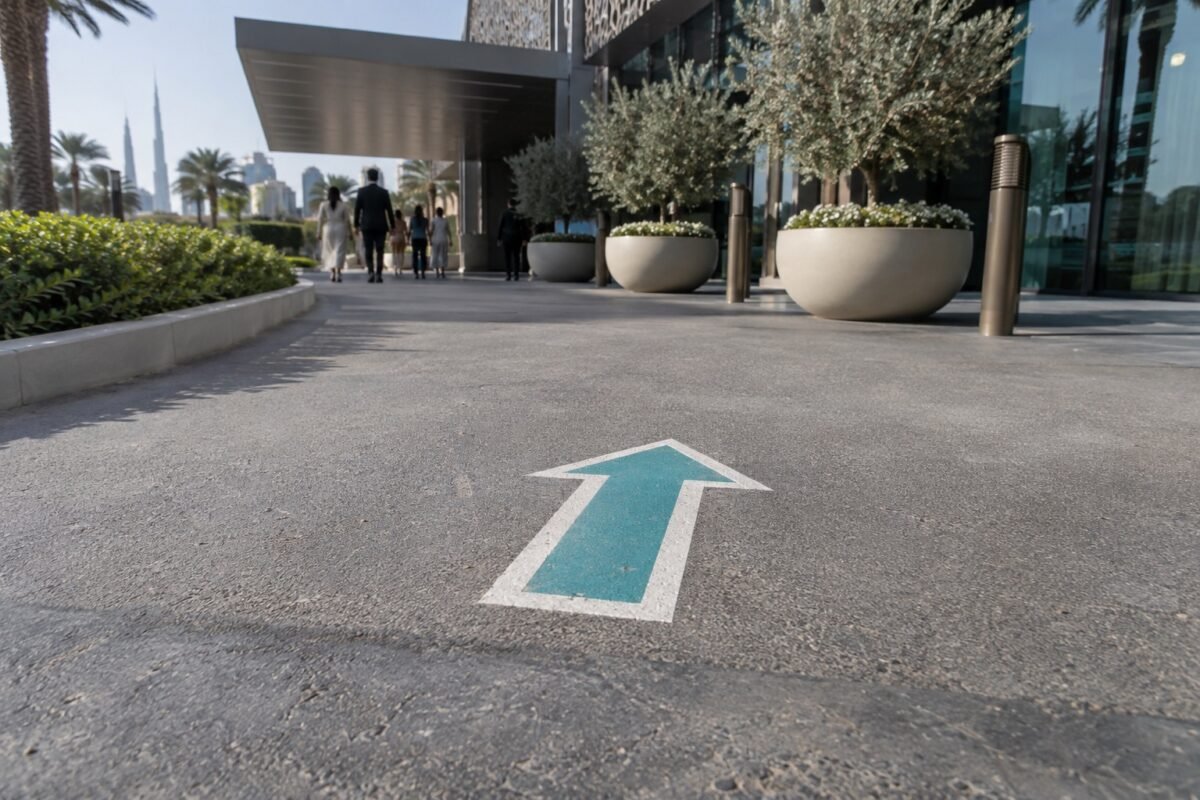
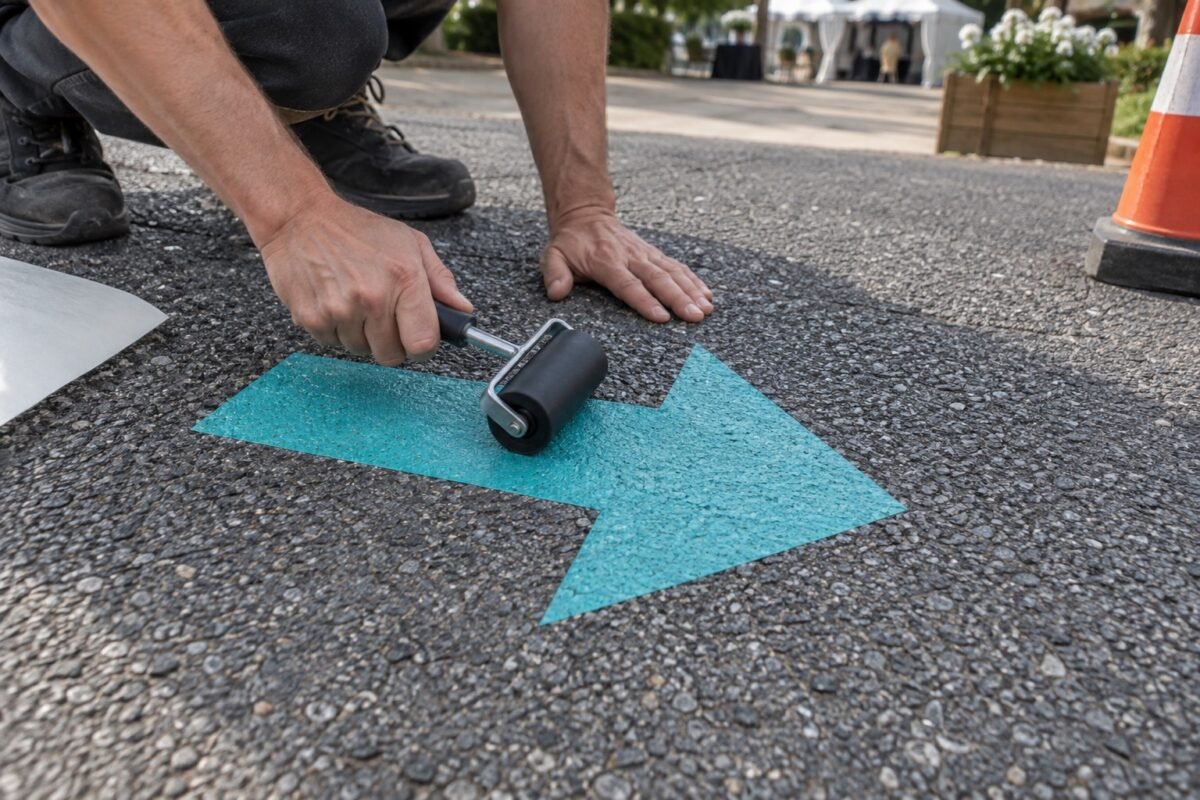
Asphalt and pavement graphics place a message directly on a suitable walking or circulation surface. On a private venue forecourt, event path or managed property, they may help visitors follow a route or notice a short-term promotion. The surface is part of the specification: a rough asphalt drive, a sealed concrete slab and a paved pedestrian path do not behave the same way. Al Burooj Advertising can discuss a ground-graphics brief in Dubai when you share artwork, dimensions, site photos and the planned display period.
Start with the surface and actual traffic
Record whether the area is asphalt, concrete, stone or another paving material, and note coatings, cracks, joints, loose aggregate, dust and drainage. A clean, dry and suitable substrate is important for any applied graphic, but the exact preparation and application conditions depend on the chosen product. Also identify whether people will walk over it, trolleys will cross it or vehicles will turn on it. These loads are not interchangeable. For an indoor floor, compare floor graphics and decals; for a message carried on a separate physical sign, see traffic and parking signs.
Design for sightlines, traction and permission
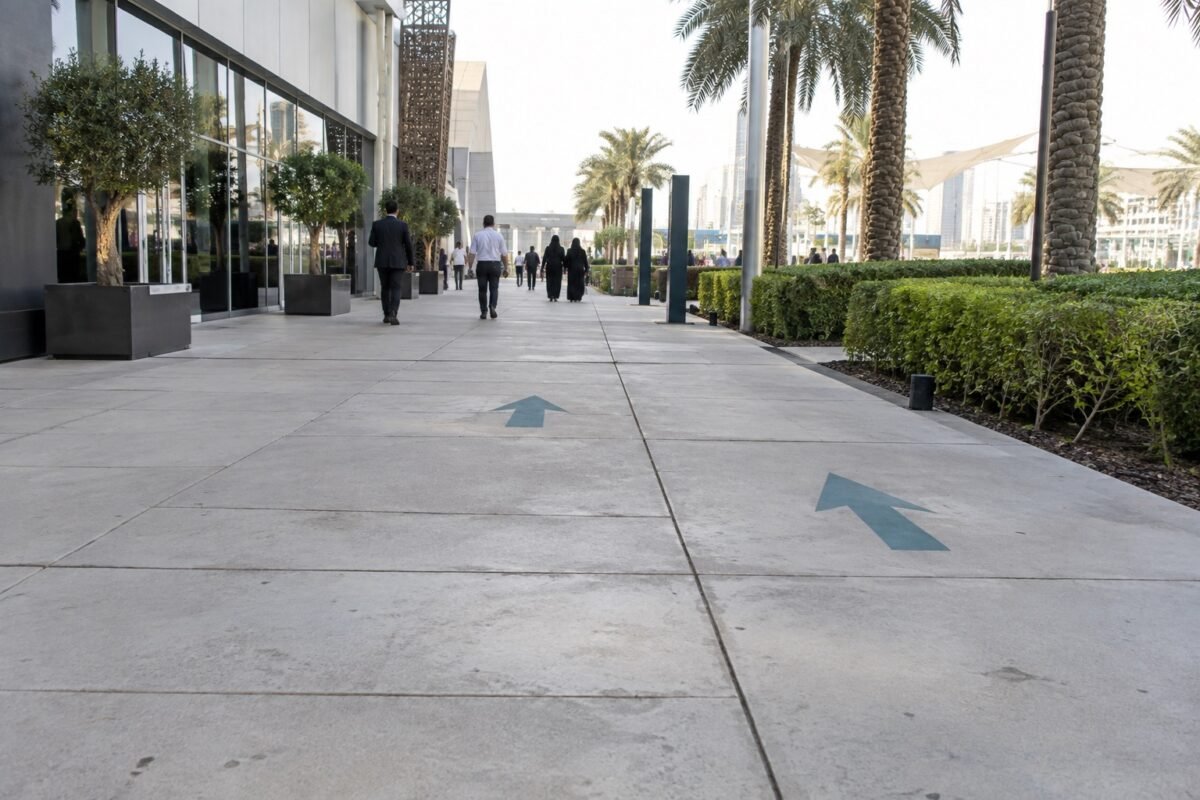
Keep directional graphics simple enough to read while someone is moving, with clear contrast against the pavement. Do not cover drainage, tactile paving, access routes or existing markings without review. The venue or property owner should approve the exact location and artwork. Where slip or traction performance, accessibility or other compliance criteria are required, provide them before production so the final material and finish can be checked; an image cannot establish compliance. Graphics for public roads or regulated traffic areas require separate authority and technical review, and should not be treated as ordinary promotional decals. Our wayfinding signs can support the route beyond the ground surface.
Quote scope, timing and removal
Send the site address, clear close and wide photos of the surface, approximate printed dimensions and quantities, artwork, traffic type, venue rules, display dates and the required installation window. State whether cleaning, a sample or suitability test, access control, after-hours work or removal is needed. Exposure, heat, cleaning and traffic can alter appearance and service life, so avoid assuming a fixed duration. For a wider short-term campaign, compare temporary signage solutions; our design service can help adapt approved artwork for the ground format. Request an asphalt and pavement graphics quote or call +971 52 673 4053. Al Burooj Advertising L.L.C is based in Al Quoz, Dubai; other UAE project availability depends on location and scope.
The images on this page are AI-generated illustrative concepts, not photographs of completed Al Burooj projects. Final substrate suitability, material, traction requirements, installation and removal scope are confirmed for the specific site.
Asphalt and pavement graphics questions
What are asphalt and pavement graphics?
They are graphics applied directly to a suitable ground surface, often for a temporary direction, event message or promotion. The material and installation method must be selected for the actual asphalt, concrete or paving and intended use.
Can the same graphic be used on asphalt and concrete?
Not automatically. Asphalt texture, concrete finish, porosity, coating, joints and surface condition can affect adhesion and appearance. Send clear site photos and confirm the substrate before a material is specified.
Are pavement graphics suitable for vehicles?
Vehicle exposure is different from pedestrian use. Tyres, turning and braking can impose much greater stress; a pedestrian graphic should not be assumed suitable for a drive lane or parking manoeuvre. Describe traffic type and frequency so suitability can be reviewed.
Will the graphic be slip-resistant?
Slip performance depends on the selected material, finish, surface, application and wet conditions. Any specific traction or compliance requirement must be provided and checked against the final product specification before installation; it should not be inferred from a visual mock-up.
Can pavement graphics be installed on public roads?
Public-road or regulated traffic markings may require authority approval, prescribed materials and qualified installation. This page describes custom private-site graphics; do not place graphics in a public right of way without the necessary permissions and technical review.
How long do asphalt graphics last outdoors?
There is no single duration for every site. Sun, heat, water, surface texture, cleaning and foot or vehicle traffic all influence wear. Share the intended display dates and conditions so the material and maintenance expectations can be discussed.
Can a temporary pavement graphic be removed?
Removal depends on the product, age, surface and exposure, and residue or surface change may be possible. If removal by a set date is important, say so in the brief and request a suitability test and removal plan for the specific substrate.
What information is needed for a pavement graphics quote?
Send the artwork, approximate graphic dimensions and quantity, site address, substrate photos, pedestrian or vehicle exposure, expected display period, installation access, any venue rules and required date. State whether surface preparation and removal are needed.